
Benefits of Learning a Musical Instrument Young
Discover how learning a musical instrument as a child supports brain development, focus, confidence, and social skills, and how to help your child get started.

Few gifts last a lifetime the way music does. When a child learns to play an instrument, they gain far more than a new skill. They build patience, focus, and confidence that carry into every part of their lives. At our academy, we see this transformation every day, and research continues to confirm what teachers have always known: starting young makes a lasting difference.
How music shapes a growing brain
Learning an instrument engages the brain in a remarkably complete way. A child reading music, coordinating both hands, and listening to pitch and rhythm is exercising memory, motor skills, and hearing all at once. Studies have linked early music education to stronger language development, better memory, and improved reasoning skills.
Because young brains are still forming connections, these benefits take root more easily in childhood. The habits and neural pathways built during early lessons often stay with a student for the rest of their life.
Skills that reach beyond the instrument
Focus and discipline
Practicing regularly teaches a child how to set a goal, work toward it, and see steady progress. Learning a difficult passage one measure at a time builds the kind of patience that helps in school and beyond.
Confidence and self-expression
Mastering a song and performing it, even for family, gives children a real sense of accomplishment. Music also becomes a healthy outlet for emotions, giving young students a way to express themselves that words sometimes cannot.
Social connection
Group lessons, ensembles, and recitals teach teamwork, listening, and the joy of creating something together. These shared experiences help children build friendships and feel part of a community.
Is my child old enough to start?
There is no single right age, and the best starting point depends on the instrument and the child. Many students begin piano or violin around ages five to seven, while instruments like guitar or wind instruments often suit slightly older children. The most important signs of readiness are curiosity and interest. If your child is drawn to music, that enthusiasm is the best foundation for learning.
How to help your child get started
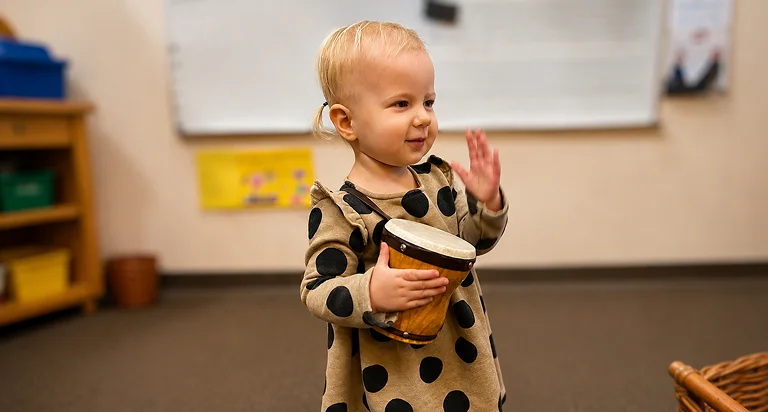
- Follow their interest: let your child explore different instruments and choose one that excites them.
- Keep practice positive: short, encouraging sessions work better than long, pressured ones.
- Celebrate small wins: progress in music comes step by step, and every milestone matters.
- Find the right teacher: a supportive, experienced instructor makes all the difference in keeping a child motivated.
Conclusion
Learning a musical instrument gives children a foundation of focus, confidence, and creativity that lasts far beyond childhood. Whether your child dreams of the stage or simply wants to enjoy making music, the early years are the perfect time to begin. Our instructors are here to guide every student, from the very first note, in a warm and encouraging environment built to help young musicians thrive.